All posts
How to Read University Assignment Guidelines Like a Pro
Vinit S · 20 Feb 2026 · 4 min read
universitymarking rubricsdistinction essayreport writingguidelinesproofreading
Here is your definitive guide to deconstructing university guidelines and the high-priority points you must note to secure a first-class grade.
1. Unpacking the "Action Verbs" (The Strategy)
The most important word in your assignment brief is the Command Verb. This tells you exactly what kind of intellectual work the professor is marking.
"Discuss" or "Critically Evaluate": This is a trap for many international students. It does not mean just describing what happened. It means you must present a balanced argument—showing both sides of a theory—and then reach a justified conclusion.
"Analyse": Don't just summarize. Break the topic down into its core components and explain how they relate to each other.
2. The Learning Outcomes: Your Grading Roadmap
Hidden near the top or bottom of your brief is a list of Learning Outcomes (LOs). Most students ignore these, but they are the "secret menu" of grading.
Professors are literally required to give you marks based on how well you meet these specific points. If an LO says "Demonstrate an understanding of ethical marketing," and you write a brilliant paper but forget to mention ethics, you cannot get a Distinction.
Pro Tip: Before you start writing, list the Learning Outcomes in a checklist. As you finish each section of your assignment, tick off which LO you just addressed.
3. The "Holy Trinity" of Technical Requirements
Even if your ideas are world-changing, failing on these three points will sink your grade:
A. Referencing Style (The Legal Fine Print)
Check if your university uses Harvard, APA, MLA, or OSCOLA. In abroad universities, "close enough" isn't good enough.
Note if they require in-text citations (Smith, 2026) or footnotes.
Check if the reference list is included in the word count (usually it isn't, but always verify!).
B. Word Count and the "10% Rule"
Most universities allow you to go 10% over or under the limit. However, some are strict—if you go one word over, they stop reading.
Note what is excluded: Usually, the title page, bibliography, and appendices are "free" words.
C. Formatting and File Type
Font: Usually Arial or Calibri, size 11 or 12.
Spacing: Most UK/US universities require 1.5 or double spacing to leave room for the professor's comments.
File Format: Almost always .docx or .pdf. Submitting a Pages or Google Doc link is a common reason for a "Non-Submission" mark.
4. The Marking Rubric: Seeing Your Future Grade
Always look for the Marking Rubric or Assessment Criteria grid. This table tells you exactly what separates a "Pass" (50%) from a "Distinction" (70%+).
If the "Distinction" column says "Evidence of wide reading beyond the core module text," that is your cue to find at least 5-10 extra journal articles that weren't mentioned in your lectures.
5. Summary Checklist: What to Highlight in Your Brief
When you first get your assignment, highlight these 6 things immediately:
The Deadline: Note the exact time and timezone (e.g., 12:00 PM GMT).
The Task: What is the specific question or problem to solve?
The Weighting: Is this worth 20% of your grade or 100%? (Spend your time accordingly!)
Submission Method: Is it via Turnitin, Canvas, or Moodle?
Anonymity: Do you need to put your name on it, or just your Student ID number?
The "Hidden" Instructions: Check for things like "Must use at least 3 case studies" or "Appendices are mandatory."
Final Thought: Don't Guess, Verify
If you read the guidelines and you're still confused, email your tutor immediately. In abroad universities, asking for clarification is seen as a sign of a serious student, not a weak one.
If you are still feeling overwhelmed by the technicalities of a UK or US assignment, or if you need help restructuring your draft to fit these strict guidelines, you can always reach out to Bluepen.uk. They have subject-matter experts who understand exactly how to "read between the lines" of university briefs to help you submit a perfect paper.
Check your own draft before you hand it in.
Grade my assignmentMore from the blog
10 Mistakes That Turn a B Essay Into a C
10 Mar 2026· 2 min read
10 Mistakes That Turn a B Essay Into a C
Sometimes the difference between a B and a C isn’t about effort, it’s about small mistakes that weaken your essay. Avoiding these common issues can significantly improve your grades.
23 Feb 2026· 3 min read
Top 5 Assignment Help Companies in India: Your Guide to Academic Success in 2026
Studying abroad or even at top-tier Indian universities has become more competitive than ever. With 2026 academic standards shifting toward deep critical analysis and strict AI policies, students are often left overwhelmed by massive workloads and complex rubrics.
20 Feb 2026· 3 min read
How to summarize papers to write literature review
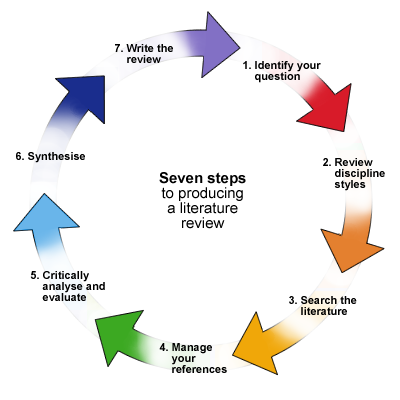
The literature review is often the most misunderstood part of a Master’s thesis. Many students treat it like a "book report" where they summarize one paper after another. In reality, a UK or US-standard literature review is a synthesis as it’s about finding the "golden thread" that connects different researchers.