All posts
How to summarize papers to write literature review
Swikriti N, Student at Kings College London · 20 Feb 2026 · 3 min read
literature reviewresearch papersprismagoogle scholarauthors
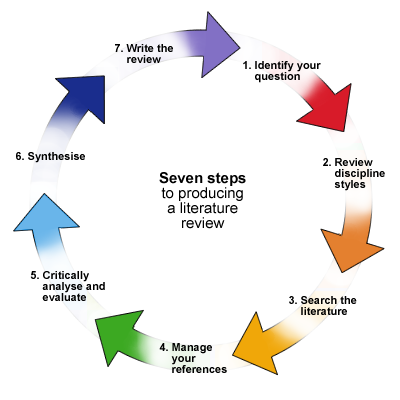
If you want to move from a basic pass to a distinction, you need a system. Here is your survival guide for finding, summarizing, and citing research like an expert.
1. Finding the "Gold Standard" Research
In 2026, you shouldn't just be "Googling" topics. You need high-impact, peer-reviewed sources that carry weight in an academic argument.
The Big Three: Start with Google Scholar, JSTOR, and ScienceDirect. These are your primary hunting grounds for credible papers.
The "Seed Paper" Strategy: Find one perfect paper that is highly relevant to your topic. Go to its Reference List. Those are your "seed" sources. This is the fastest way to map out the foundational theories in your field.
Network Tools: Use tools like ResearchRabbit. You plug in a few papers, and they visualize a "network" of related studies you might have missed.
2. The Art of the "Three-Pass" Summary
Don't read every word of a 30-page paper on the first go. Use the three-pass method to save time:
The Scan (5 mins): Read the Abstract, Intro, and Conclusion. Does this paper actually answer your research question? If not, toss it.
The Strategic Read (15 mins): Look at the Methodology and the Results. How did they get their data? What was the main finding?
The Critique (30 mins): Only read the full Discussion if the paper is a "core" source. Take notes on its limitations—professors love it when you point out what a study didn't do.
3. Organize with a Synthesis Matrix
This is the "secret sauce" for a 70% grade. Instead of a list of notes, create a grid in Excel or Google Sheets. List authors down one side and key themes across the top.
When you start writing, you don't look at the papers—you look at the Matrix. You’ll suddenly see that two different authors might talk about the same topic but disagree on the outcome. That "disagreement" is exactly what you should write about.
4. Citing for Credibility
Citations are about proving your "Academic Rigour."
Synthesis Citations: Instead of "Smith said X," try "Recent studies suggest that outcomes are highly dependent on management style (Smith, 2025; Jones, 2026)."
Paraphrasing is King: Use direct quotes sparingly. Paraphrasing shows the professor that you actually understand the material rather than just hitting "copy-paste."
Reference Managers: Use Zotero or Mendeley. These tools format your bibliography automatically, saving you hours of manual checking.
Still Feeling Overwhelmed?
Even with a plan, a Master’s literature review is a massive undertaking. If you find yourself stuck, unable to bridge the gaps between complex theories, or simply running out of time, you don’t have to struggle alone.
For expert support, you can reach out to Bluepen.uk or assignmentsnow.org . They specialize in helping students navigate the toughest parts of their academic journey. With a team of pre-vetted, expert writers who understand the high standards of UK and international universities, they can help you craft a perfectly structured, critically analyzed literature review that aims for that distinction grade.
Check your own draft before you hand it in.
Grade my assignmentMore from the blog
10 Mistakes That Turn a B Essay Into a C
10 Mar 2026· 2 min read
10 Mistakes That Turn a B Essay Into a C
Sometimes the difference between a B and a C isn’t about effort, it’s about small mistakes that weaken your essay. Avoiding these common issues can significantly improve your grades.
23 Feb 2026· 3 min read
Top 5 Assignment Help Companies in India: Your Guide to Academic Success in 2026
Studying abroad or even at top-tier Indian universities has become more competitive than ever. With 2026 academic standards shifting toward deep critical analysis and strict AI policies, students are often left overwhelmed by massive workloads and complex rubrics.
How to Read University Assignment Guidelines Like a Pro
20 Feb 2026· 4 min read
How to Read University Assignment Guidelines Like a Pro
Landing in a new country for your studies is a whirlwind of excitement, but the first time you open an "Assignment Brief" or "Module Handbook," that excitement can quickly turn into confusion. In abroad universities, especially in the UK, USA, Canada, and Australia—the guidelines aren't just "suggestions." They are a legalistic contract. If you miss a minor detail in the instructions, you can lose 10-20% of your marks before the professor even reads your first sentence.